Saudi Designers Take the Spotlight at Milan Design Week 2026
Explore how Saudi designers stole the spotlight at Milan Design Week 2026. From the Jusoor collection to Ithra’s AI-driven installations at Isola, discover the visionaries who are redefining global design through a Saudi lens.
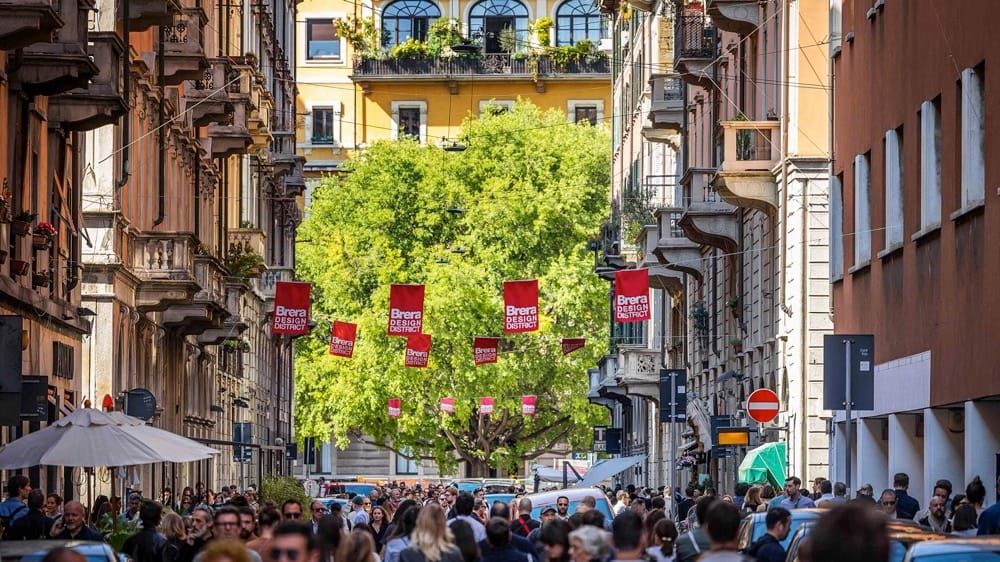
For decades, Milan Design Week has served as the undisputed global capital of aesthetic trends. But in April 2026, the conversation shifted from the traditional Italian giants toward a new, assertive voice: Saudi Arabia. Represented by the Architecture & Design Commission and the King Abdulaziz Center for World Culture (Ithra), a group of Saudi visionaries proved that they are no longer just participants in the global design dialogue, they are its authors.
From the historic halls of the Pinacoteca di Brera to the experimental laboratories of the Isola Design District, these are the designers and the works that defined the Saudi presence in Milan.
The Jusoor Collection: A Bridge to Global Craft
Located in the prestigious Sala delle Adunanze at the Pinacoteca di Brera, the "Jusoor" (Bridges) exhibition marked a watershed moment. Curated by Samer Yamani, the initiative paired five Saudi designers with international studios from Spain, India, and Nepal to produce limited-edition works that prioritized process over mere product.
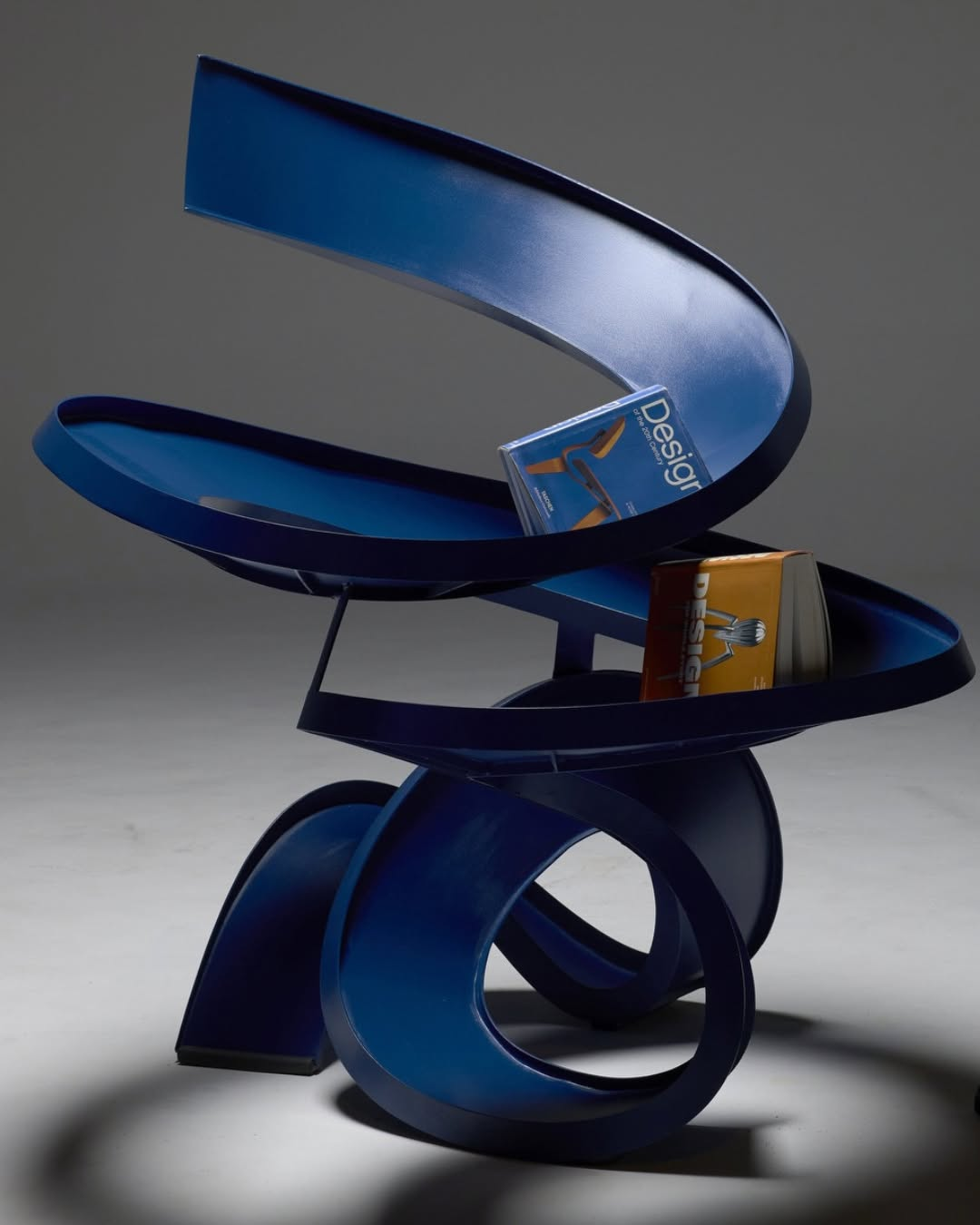
1. Saud Alsaleh: The TAH Bookshelf
Collaborating with the Spanish studio Lagranja Design, Saud Alsaleh presented one of the most personal pieces of the week. The TAH Bookshelf is a metallic, spiral structure designed to reflect the non-linear acquisition of knowledge.
- The Narrative: Alsaleh drew from his personal experience with dyslexia, challenging the traditional "linear" shelf.
- The Design: Its sweeping curves and modularity represent the idea that learning and memory are fluid, multi-directional processes.
2. Abeer AlRabiah & Albandari Sulaiman: The CORA Collection
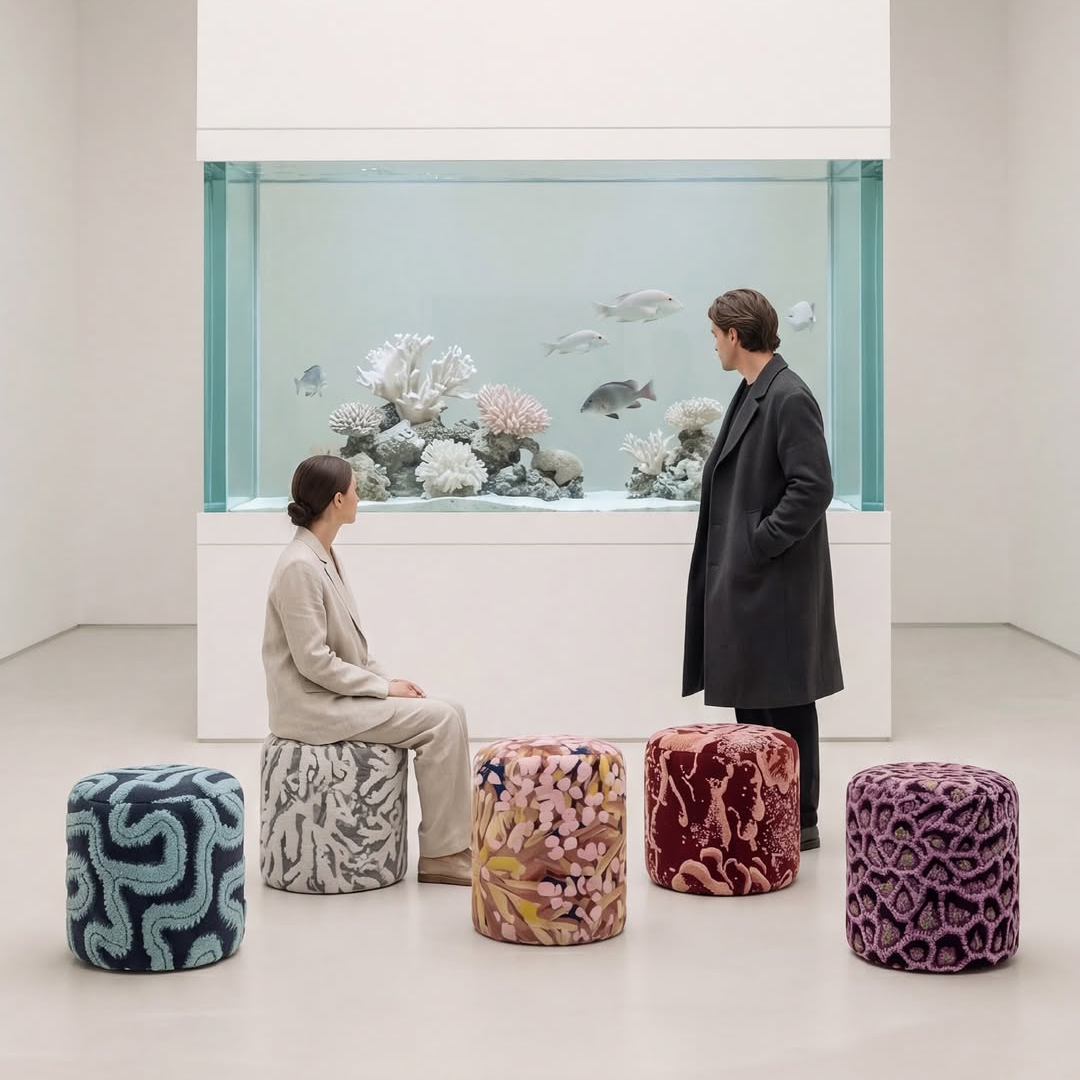
In a partnership with the renowned Lebanese-Nepalese rug house Iwan Maktabi, Abeer AlRabiah and Albandari Sulaiman produced a series of 12 sculptural stools and side tables.
- The Narrative: The collection is a tribute to the coral ecosystems of the Red Sea.
- The Design: The pieces utilize complex weaving and textures to mimic underwater life. Critically, three of the pieces were intentionally "bleached" in color, serving as a silent but powerful commentary on the fragility of marine biodiversity and the global climate crisis.
3. Muotaz Abbas: Thanoon
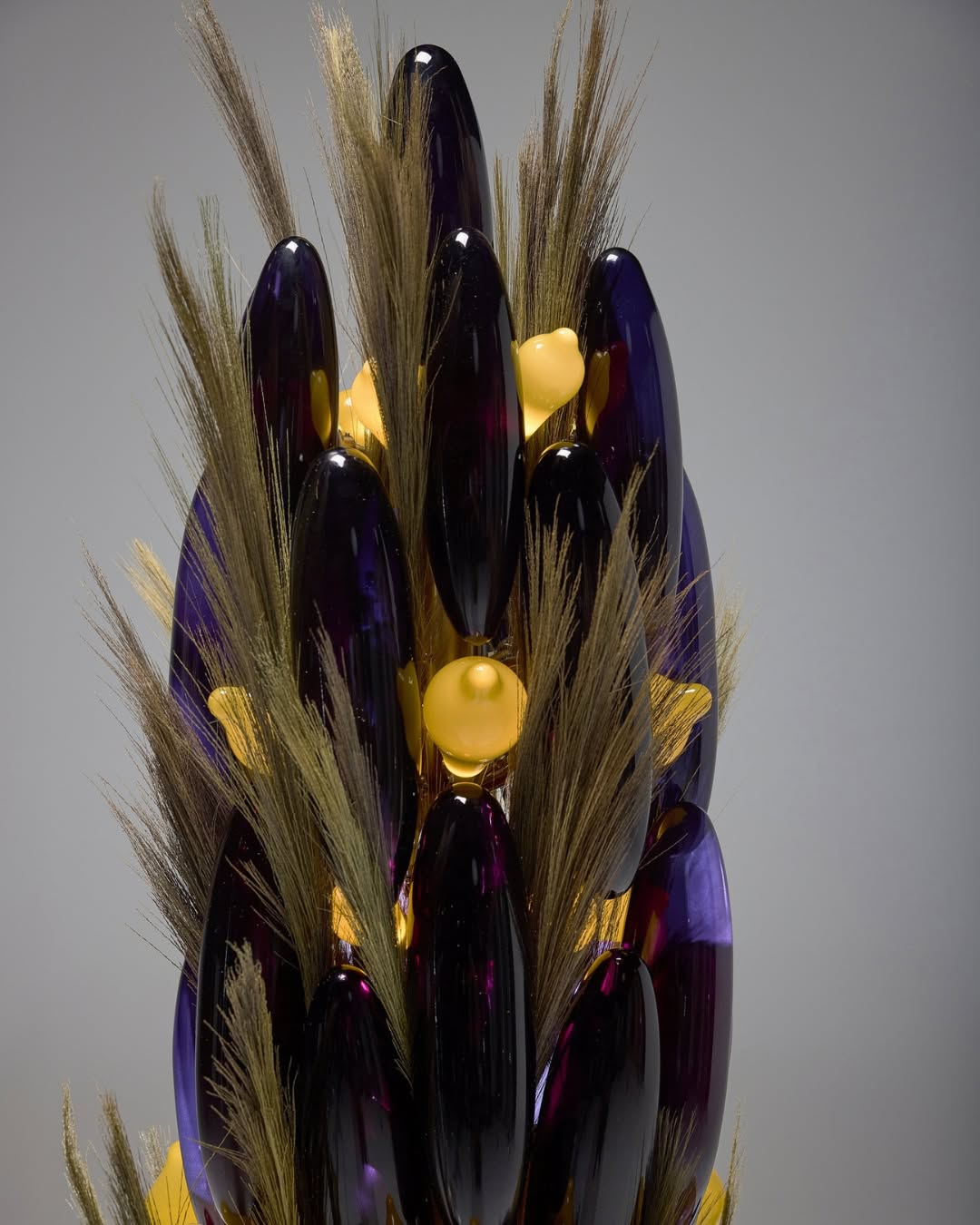
Muotaz Abbas collaborated with India’s Klove Studio to create Thanoon, a monumental lighting installation.
- The Narrative: Inspired by the resilience of desert flora, specifically plants that thrive in the harsh environments of the Arabian Peninsula.
- The Design: The sculpture combines hand-blown glass with intricate metalwork, casting shadows that mimic the sprawling roots and hardy structures of desert plants.
4. Aseel Alamoudi: Takween
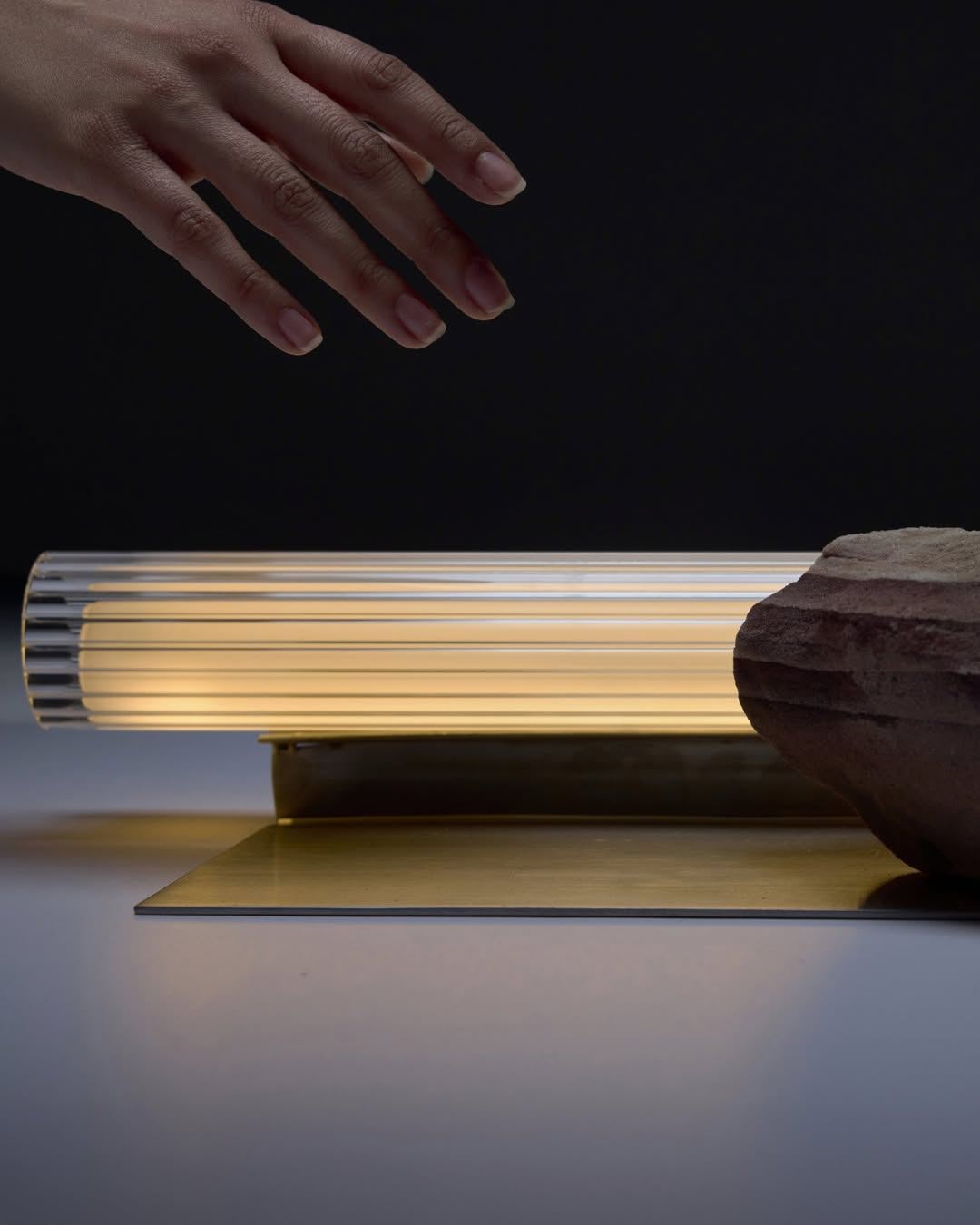
Also working with Klove Studio, Aseel Alamoudi explored the intersection of Saudi Arabia’s natural landscape and its rapid industrial evolution.
- The Narrative: Takween explores the dialogue between raw, organic materials and the precision of modern industry.
- The Design: The piece features heavy blocks of raw sandstone interlocked with industrial steel and delicate glass elements, representing the structural metamorphosis of the Kingdom.
The Sensory Narrative: Attar Al-Balad
One of the most visited interactive stations was Attar Al-Balad, a sensory installation created by Saudi talents to evoke cultural memory.
- The Design: Sculptural blocks were formed from traditional Saudi herbs and spices, including olibanum (frankincense) and cedarwood.
- The Impact: In a week dominated by visual stimuli, this installation used scent to prove that cultural identity is often stored in our senses, challenging the "visual-only" default of European design.
Zaza Maizon: Reimagining the Desert for the Future
In the Fuorisalone circuit, the Saudi interior design studio Zaza Maizon stood out for its ability to translate traditional Saudi symbols into the language of futuristic luxury.
- The Exhibition: The studio presented a collection that reimagined fragments of the Saudi landscape, such as the silhouettes of falcons and the undulating lines of sand dunes, into contemporary furniture.
- The Fact: Zaza Maizon’s work highlighted a major theme of the 2026 week: the transition of Saudi homes from traditional sand-dune-integrated dwellings to modern skyscrapers, without losing the "soul" of the heritage.
A New Era of Authorship
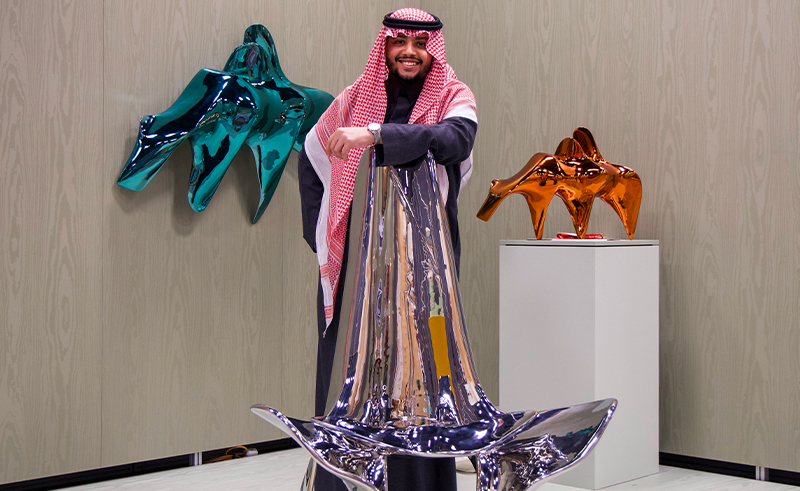
Milan Design Week 2026 proved that Saudi design has moved past the stage of "discovery." The designers mentioned above did not simply display furniture, they displayed a philosophy. Whether it was through the environmental advocacy of the CORA collection or the cognitive challenges posed by Ithra’s AI installations, Saudi designers proved they are ready to lead the future of global design.
Follow ZiiMAG for the latest in fashion, and design across the Kingdom.